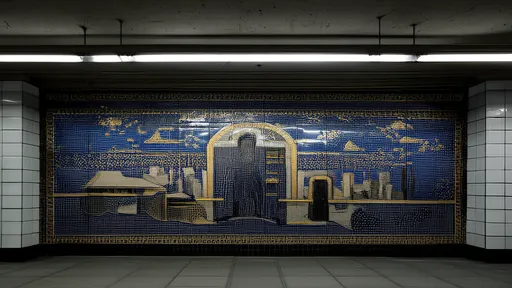
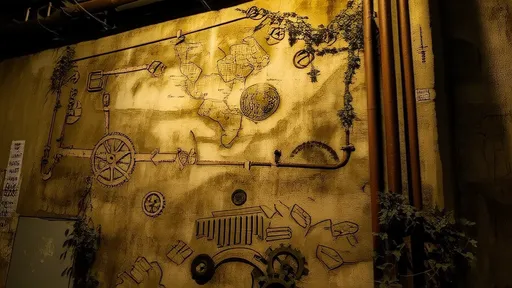
In the heart of many cities, old buildings stand as silent witnesses to bygone eras, their walls adorned with fading paintings that tell stories of cultural heritage and artistic expression. The restoration of these historical wall paintings is not merely an act of preservation but a creative endeavor that bridges the past and the present. This process involves a delicate balance between honoring original craftsmanship and introducing innovative techniques to ensure these treasures endure for future generations.
The significance of wall paintings in old buildings extends beyond their aesthetic value. They serve as historical documents, capturing the social, political, and cultural contexts of their time. From religious motifs in ancient temples to propaganda art in 20th-century structures, these paintings offer insights into the beliefs and values of the people who created them. However, exposure to environmental factors, neglect, and urban development has left many of these artworks in a state of disrepair, making restoration both urgent and complex.
Restoration efforts begin with a thorough assessment of the painting's condition. Experts use advanced technologies such as multispectral imaging and digital mapping to analyze layers of paint, identify original pigments, and detect underlying damages. This scientific approach is complemented by archival research, where historians delve into old records, photographs, and accounts to understand the artwork's origins and significance. This multidisciplinary collaboration ensures that restorers have a comprehensive understanding of what they are working with, guiding every decision in the process.
One of the most challenging aspects of restoration is deciding how much to intervene. Purists argue for minimal interference, aiming to stabilize the artwork without altering its aged appearance. Others advocate for a more creative approach, where missing sections are reconstructed based on historical evidence, allowing the painting to be appreciated in its entirety. This debate often centers on ethical considerations: Should restoration make the artwork look as it did centuries ago, or should it acknowledge the passage of time, leaving visible traces of history?
In recent years, a trend towards creative restoration has gained momentum. This method embraces innovation while respecting historical integrity. For instance, restorers might use reversible materials and techniques, ensuring that future generations can undo or modify their work if new information emerges. Additionally, digital tools are employed to recreate lost elements virtually, offering viewers a glimpse of the original design without physically altering the surface. Such approaches highlight the evolving nature of restoration, where technology and tradition merge to preserve cultural heritage.
Community involvement has also become a cornerstone of modern restoration projects. Local residents, artists, and historians are often engaged in the process, contributing their knowledge and fostering a sense of ownership. Public workshops, exhibitions, and interactive sessions help raise awareness about the importance of these cultural assets, transforming restoration from an expert-led activity into a collective endeavor. This participatory model not only enriches the project with diverse perspectives but also ensures that the restored artwork remains relevant to the community it represents.
Case studies from around the world illustrate the success of creative restoration. In Italy, the restoration of medieval frescoes in churches has incorporated digital projections to fill gaps, creating an immersive experience for visitors. In Mexico, murals from the early 1900s have been revived using eco-friendly pigments that mimic historical colors while offering better durability. These examples demonstrate that restoration is not about erasing history but about reinterpreting it in ways that resonate with contemporary audiences.
Despite these advances, restorers face numerous challenges. Funding shortages often limit the scope of projects, forcing teams to prioritize certain areas over others. Climate change poses another threat, as rising temperatures and humidity levels accelerate the deterioration of organic materials. Moreover, the lack of standardized guidelines sometimes leads to inconsistent practices, highlighting the need for international cooperation and knowledge sharing among conservation experts.
Looking ahead, the field of restoration is poised to embrace even more innovative solutions. Artificial intelligence is being explored to predict degradation patterns and recommend preventive measures. Sustainable materials, such as bio-based coatings, are being developed to protect paintings without harming the environment. These advancements promise to make restoration more efficient and effective, safeguarding historical wall paintings for centuries to come.
Ultimately, the creative restoration of old building wall paintings is a testament to humanity's enduring desire to connect with its past. It is a dynamic process that combines art, science, and community engagement to breathe new life into fading masterpieces. By honoring historical while embracing modernity, these efforts ensure that the stories etched on walls continue to inspire and educate, reminding us of the rich tapestry of human creativity and resilience.
By /Aug 28, 2025

By /Aug 28, 2025
By /Aug 28, 2025
By /Aug 28, 2025

By /Aug 28, 2025
By /Aug 28, 2025
By /Aug 28, 2025
By /Aug 28, 2025
By /Aug 28, 2025

By /Aug 28, 2025

By /Aug 28, 2025
By /Aug 28, 2025
By /Aug 28, 2025

By /Aug 28, 2025
By /Aug 28, 2025
By /Aug 28, 2025
By /Aug 28, 2025

By /Aug 28, 2025
By /Aug 28, 2025

By /Aug 28, 2025
