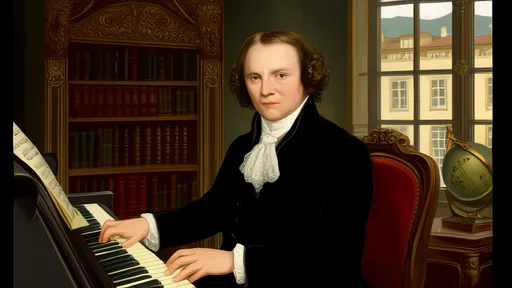
The name Pyotr Ilyich Tchaikovsky evokes a cascade of emotions—melancholic waltzes, triumphant symphonies, and the delicate sorrow of a lonely soul. More than just a composer, Tchaikovsky became the very embodiment of Russian music, a man whose works transcended national borders while remaining deeply rooted in the soil of his homeland. His life, marked by personal turbulence and artistic triumphs, mirrors the contradictions of Russia itself—grand yet intimate, exuberant yet haunted by an undercurrent of sorrow.
Born in 1840 in Votkinsk, a small industrial town in the Russian Empire, Tchaikovsky’s early years gave little indication of the musical genius he would become. His family, though supportive, initially steered him toward a career in civil service. It wasn’t until his early twenties that he abandoned bureaucracy for the St. Petersburg Conservatory, a decision that would alter the course of classical music. Unlike many of his contemporaries, Tchaikovsky didn’t emerge from the nationalist circles of "The Five," a group of composers dedicated to creating a distinctly Russian sound. Instead, he walked a solitary path, blending Western European forms with the raw emotionality of Slavic folk traditions.
The result was a sound unmistakably his own. Take, for instance, the Pathétique Symphony, his final completed work. Here, Tchaikovsky doesn’t just compose music—he bares his soul. The symphony’s aching melodies and abrupt, tragic finale seem to foreshadow his own mysterious death just days after its premiere. Yet for all its darkness, there’s a visceral beauty that lingers, a quality that defines much of his oeuvre. This duality—despair intertwined with radiant lyricism—became a hallmark of his style, resonating with audiences then and now.
Ballet, perhaps more than any other medium, allowed Tchaikovsky’s genius to flourish. Before him, ballet scores were often functional, serving as accompaniment to dance. He transformed them into standalone masterpieces. Swan Lake, initially a failure in 1877, revolutionized the art form with its symphonic depth. The haunting oboe melody of the "White Swan" theme doesn’t merely support the dancer’s movements—it tells a story of cursed love and transformation. Similarly, The Nutcracker, now a Christmas staple, broke new ground with its vivid orchestration, from the tinkling celesta of the "Dance of the Sugar Plum Fairy" to the thunderous crescendos of the "Waltz of the Flowers." These works didn’t just accompany dance; they elevated it to high art.
Yet Tchaikovsky’s relationship with Russia was complex. While his music drew from Russian folk tunes and literature (his operas Eugene Onegin and The Queen of Spades being prime examples), he often faced criticism from nationalist circles for being "too Western." His frequent travels abroad and open admiration for Mozart and Bizet fueled this perception. Ironically, it’s precisely this fusion—the marriage of Russian emotional intensity with European structural sophistication—that made his works so universally accessible. The 1812 Overture, with its bombastic cannons and folk hymnody, might celebrate a Russian victory over Napoleon, but its theatricality speaks a global language.
Personal demons shadowed Tchaikovsky’s brilliance. His homosexuality, in an era when it was criminalized in Russia, caused him lifelong anguish. Some scholars suggest this inner turmoil seeped into works like the Symphony No. 6, where moments of ecstasy collapse into abysmal gloom. His disastrous marriage to Antonina Miliukova lasted mere weeks, plunging him into a creative crisis. Yet from this pain emerged some of his most profound creations. The Violin Concerto in D major, composed during his recovery in Switzerland, channels despair into something transcendent—its fiery finale a defiant celebration of survival.
Tchaikovsky’s death in 1893, officially attributed to cholera, remains shrouded in speculation. Some argue it was suicide, others a reckless act of drinking unboiled water during an epidemic. Whatever the truth, his passing at 53 felt tragically premature, cutting short a career still in its ascendancy. Yet his legacy proved indestructible. From the sweeping romance of the Romeo and Juliet Fantasy-Overture to the playful elegance of the Serenade for Strings, his music became Russia’s ambassador to the world.
Today, Tchaikovsky’s influence reverberates far beyond concert halls. Film scores from Fantasia to psychological thrillers borrow his motifs, recognizing their innate storytelling power. Young pianists still tremble before the technical demands of his Piano Concerto No. 1, while ballet companies rely on his works for their very survival. More than a composer, he became a cultural force—a man who gave voice to the Russian psyche with all its contradictions. In melodies of heart-wrenching vulnerability and thunderous grandeur, Tchaikovsky didn’t just write music. He immortalized the soul of a nation.
By /Aug 7, 2025
By /Aug 7, 2025
By /Aug 7, 2025
By /Aug 7, 2025
By /Aug 13, 2025
By /Aug 7, 2025

By /Aug 7, 2025
By /Aug 7, 2025
By /Aug 7, 2025
By /Aug 7, 2025
By /Aug 7, 2025
By /Aug 7, 2025

By /Aug 13, 2025

By /Aug 13, 2025
By /Aug 7, 2025

By /Aug 7, 2025
By /Aug 7, 2025

By /Aug 7, 2025
By /Aug 13, 2025
By /Aug 13, 2025
