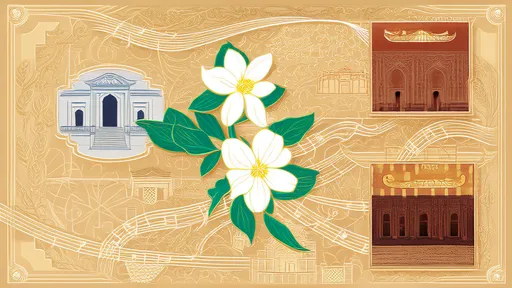
The delicate white petals of jasmine have long been associated with purity and grace in Chinese culture, but few could have predicted how this humble flower would blossom into a global musical phenomenon. Jasmine Flower, the ancient Chinese folk song known as "Mo Li Hua" in Mandarin, has completed a remarkable journey from the tea houses of Jiangsu province to concert halls worldwide, becoming perhaps the most recognizable melody to emerge from China's rich musical heritage.
First documented during the Qing Dynasty's Qianlong era (1735-1796), the song's origins remain shrouded in the mists of time. What began as a regional folk tune passed down orally through generations of flower sellers and tea pickers gradually evolved into a cultural touchstone. The song's simple yet haunting pentatonic melody, combined with lyrics praising jasmine's beauty and fragrance, captured something essential about Chinese aesthetic values - the celebration of nature's unadorned elegance.
The song's international breakthrough came through an unlikely intermediary - European colonialists and merchants stationed in Chinese port cities during the 19th century. British tea traders, enchanted by the melody they heard sung by local workers, began transcribing and adapting the tune. By the late 1800s, Western composers including Giacomo Puccini had incorporated variations of Mo Li Hua into their works, though often filtered through a distinctly Orientalist lens.
China's own 20th century musical ambassadors propelled the song to new heights. Legendary soprano Zhou Xiaoyan included Jasmine Flower in her international concert repertoire during the 1940s, while the Chinese government strategically promoted it as part of cultural exchange programs. The song's apolitical nature and universal themes made it ideal for transcending political barriers during tense diplomatic periods.
Few moments cemented the song's global status more dramatically than its selection as the theme music for Beijing's 2008 Olympics. When Chinese pianist Lang Lang performed an elegant rendition during the opening ceremony's cultural segment, an estimated billion viewers worldwide heard the melody simultaneously. This carefully chorestrated presentation showcased how traditional folk culture could serve modern nationalist narratives while maintaining artistic integrity.
The song's adaptability explains its enduring appeal. From Harlem gospel choirs to Vienna boys' choirs, from Japanese anime soundtracks to Peruvian pan flute ensembles, Mo Li Hua has been reinterpreted across genres and cultures. Ethnomusicologists note the song's pentatonic structure makes it easily adaptable to various musical traditions, while its floral theme translates universally. Contemporary Chinese musicians continue reinventing the song - rock bands add electric guitar riffs, a cappella groups craft intricate harmonies, and electronic producers build dance beats around the familiar melody.
This global journey hasn't been without controversy. Some scholars criticize Western adaptations that exoticize the melody, divorcing it from its cultural context. Others argue the song's commercialization - appearing in everything from mobile phone ringtones to airline safety videos - dilutes its artistic significance. Yet even these debates testify to the song's extraordinary cultural penetration; few folk melodies inspire such passionate discussion centuries after their creation.
Today, Jasmine Flower stands as a musical bridge between China and the world. Chinese schoolchildren learn it as part of their cultural heritage, while international music students encounter it as their first introduction to Chinese music. The song's journey mirrors China's own complex relationship with globalization - maintaining distinct cultural identity while engaging creatively with the world. As new generations of artists continue reimagining this musical heirloom, the jasmine keeps blooming in unexpected places, its fragrance carried ever further by the winds of cultural exchange.

By /Aug 7, 2025

By /Aug 7, 2025
By /Aug 7, 2025

By /Aug 7, 2025
By /Aug 13, 2025
By /Aug 7, 2025

By /Aug 7, 2025
By /Aug 7, 2025

By /Aug 7, 2025

By /Aug 7, 2025

By /Aug 7, 2025

By /Aug 7, 2025

By /Aug 13, 2025

By /Aug 13, 2025

By /Aug 7, 2025
By /Aug 7, 2025
By /Aug 7, 2025

By /Aug 7, 2025
By /Aug 13, 2025

By /Aug 13, 2025
