Double Bass Drum Speed Improvement Plan

Aug 13, 2025 By

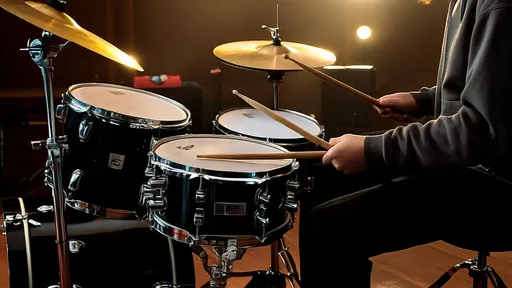
The pursuit of speed in double bass drumming has become a hallmark of modern drumming techniques, particularly in genres like metal, progressive rock, and fusion. Drummers constantly push their physical limits to achieve faster, cleaner, and more controlled footwork. While the journey to blistering double pedal speed is demanding, a systematic approach combining technique, endurance, and mental focus can yield significant results.

Understanding the mechanics of double bass playing is crucial before attempting any speed-building regimen. Unlike single pedal playing where the dominant foot carries most of the workload, double bass requires equal development of both feet. This bilateral coordination challenges the nervous system and muscle memory in unique ways. Many drummers find their non-dominant foot significantly weaker, creating an imbalance that must be addressed through targeted practice.

The foundation of speed lies in proper ankle technique. There are two primary approaches to foot movement: heel-up and heel-down playing. Most speed-oriented drummers prefer the heel-up position as it allows for greater power and rebound utilization. Within this technique, players develop either a swivel motion or a piston-like up-and-down movement. Neither is inherently superior; the choice depends on individual physiology and comfort. What matters most is maintaining consistent motion and avoiding unnecessary tension in the calves or shins.

Metronome practice remains the undisputed king of speed development. Starting at tempos where you can play sixteenth notes with perfect form and timing is essential. The common mistake of pushing tempo too quickly leads to sloppy technique that ultimately limits maximum speed potential. A practical approach involves spending at least a week at each tempo increment before moving up 5-10 BPM. This gradual progression allows tendons and muscles to adapt while reinforcing proper neural pathways.

Endurance training forms another critical component often overlooked in speed development. The ability to maintain high speeds for extended periods requires cardiovascular fitness and muscular stamina. Implementing interval training into practice sessions mimics the demands of actual performance. For example, alternate between one minute of maximum speed bursts and two minutes of moderate tempo playing. Over time, increase the duration of high-speed intervals while decreasing recovery periods.

Equipment setup plays a surprisingly significant role in achieving faster double bass performance. Pedal spring tension, beater angle, and throne height all contribute to playing efficiency. Generally, higher spring tension facilitates faster rebound but requires more control. Many speed-focused drummers prefer a beater angle around 45 degrees from the head, providing an optimal balance between power and quick response. Throne height should allow for slightly more than a 90-degree knee bend, preventing unnecessary strain during extended playing sessions.

The mental aspect of speed development cannot be overstated. Visualization techniques used by Olympic athletes translate remarkably well to drumming. Spending time away from the kit mentally rehearsing perfect technique at high speeds creates neural patterns that manifest physically during actual playing. This mental practice becomes particularly valuable when recovering from fatigue or injury, allowing continued progress without physical strain.

Cross-training with other instruments or physical activities provides unexpected benefits for double bass speed. Activities that develop limb independence like piano or martial arts enhance the brain's ability to process complex rhythmic patterns. Cardiovascular exercises, especially those emphasizing leg endurance like cycling or stair climbing, contribute to the stamina required for extended double bass passages.

Recording and analyzing practice sessions offers objective feedback that the playing moment often obscures. Listening back reveals timing inconsistencies between feet, uneven dynamics, and subtle tension that limit speed. Video analysis adds another dimension, allowing visual assessment of posture and technique inefficiencies. This analytical approach transforms subjective feelings into measurable data for targeted improvement.

The role of proper nutrition and recovery in speed development parallels its importance in athletic training. Hydration significantly affects muscle performance, with even mild dehydration causing noticeable decreases in speed and coordination. Foods rich in magnesium and potassium help prevent muscle cramps during intense practice sessions. Equally important is allowing adequate recovery time between strenuous workouts to prevent overuse injuries common in speed-focused drumming.

Advanced techniques like double strokes and hybrid patterns open new dimensions in speed playing. Developing clean, controlled doubles with each foot effectively doubles potential speed while reducing physical strain. Incorporating these into daily exercises, starting painfully slow to ensure evenness between feet, builds a foundation for seemingly superhuman speeds at comfortable effort levels.

Ultimately, the path to remarkable double bass speed is a marathon, not a sprint. The drummers who achieve and maintain extreme velocities do so through consistent, intelligent practice over years rather than weeks. Patience with the process and celebration of small victories maintain motivation through the inevitable plateaus. What begins as a physical challenge transforms into a meditative discipline where speed becomes the byproduct of mastery rather than the primary goal.

The modern drumming landscape continues to elevate technical standards, with double bass speed being one of the most visible metrics of proficiency. However, true musicality lies in applying these technical abilities with taste and creativity. The most respected drummers combine their speed capabilities with dynamic control and musical sensitivity, reminding us that velocity serves the music rather than the reverse.
Recommend Posts
Music

Franz Liszt: The King of Piano and His Legendary Life

By /Aug 7, 2025

The name Franz Liszt resonates through the annals of music history like a thunderclap. Born in 1811 in the small village of Raiding, then part of the Hungarian Kingdom, Liszt would grow to become one of the most influential musicians of the 19th century. His life was a whirlwind of artistic innovation, personal drama, and unparalleled virtuosity, earning him the title "The King of Piano." To understand Liszt is to delve into a world where genius and passion collided, leaving an indelible mark on classical music.
Music

Tchaikovsky: The Soul of Russian Music

By /Aug 7, 2025

The name Pyotr Ilyich Tchaikovsky evokes a cascade of emotions—melancholic waltzes, triumphant symphonies, and the delicate sorrow of a lonely soul. More than just a composer, Tchaikovsky became the very embodiment of Russian music, a man whose works transcended national borders while remaining deeply rooted in the soil of his homeland. His life, marked by personal turbulence and artistic triumphs, mirrors the contradictions of Russia itself—grand yet intimate, exuberant yet haunted by an undercurrent of sorrow.
Music

The Eternal Beauty of Dai Music under the Moonlight: The Phoenix Tail Bamboo"

By /Aug 7, 2025

The soft glow of moonlight filters through the bamboo groves, casting delicate shadows on the earth below. It is in this ethereal setting that the timeless beauty of Dai music comes alive, weaving stories of love, nature, and tradition. "Moonlight Over the Bamboo Grove"—a melody that has transcended generations—stands as a testament to the enduring allure of Dai culture. This musical masterpiece, with its gentle cadence and evocative tones, captures the soul of a people deeply connected to their land and heritage.
Music

Chopin Nocturnes: The Pinnacle of Romantic Piano Poetry

By /Aug 7, 2025

The velvet hush of twilight seems to linger in the air when Frédéric Chopin's Nocturnes begin to play. These twenty-one short masterpieces for solo piano represent not merely compositions but whispered confessions, the kind that emerge in the sacred quiet between midnight and dawn. More than any other works in the piano repertoire, Chopin's Nocturnes capture the very essence of Romanticism - that perfect alchemy of poetic intimacy and virtuosic expression that transformed piano music forever.
Music

Violin Vibrato Emotional Expression Training

By /Aug 13, 2025

The art of violin vibrato is one of the most nuanced techniques in a musician’s arsenal, capable of transforming a simple note into a vessel of profound emotional expression. Unlike technical exercises that focus on speed or precision, vibrato demands a deeper connection between the player and their instrument. It is not merely a mechanical motion but a language of its own, speaking through subtle variations in pitch and intensity. For centuries, violinists have used vibrato to convey emotions ranging from tender longing to fiery passion, making it an indispensable tool for musical storytelling.
Music

Ah Bing and the Moon's Reflection: The Final Crescendo of a Blind Musician's Life

By /Aug 7, 2025

The haunting melody of Er Quan Ying Yue (Moon Reflected on Second Spring) lingers in the air like a whisper from the past, a sonic embodiment of sorrow and resilience. Its creator, the blind folk musician Abing (born Hua Yanjun), remains one of China’s most enigmatic and tragic artistic figures. His life, etched in poverty and hardship, became the crucible for a musical masterpiece that transcends time.
Music

The Butterfly Lovers: A Musical Legend of the Eastern Romeo and Juliet

By /Aug 7, 2025

The timeless tale of Butterfly Lovers, often hailed as the Eastern Romeo and Juliet, has captivated audiences for centuries. Unlike its Western counterpart, this Chinese legend is not just a story of tragic love but also a cultural cornerstone that has inspired art, literature, and most notably, music. The Liang Zhu narrative, as it is known in Mandarin, transcends mere folklore—it is a symphony of emotions, a bridge between ancient traditions and modern interpretations, and a testament to the universal language of love and loss.
Music

The Eternal Resonance of Mei Lanfang: Peking Opera's Timeless Maestro

By /Aug 7, 2025

The name Mei Lanfang evokes more than just memories of a performer; it symbolizes the very soul of Peking Opera. For over half a century, his artistry transcended borders, redefined tradition, and left an indelible mark on global theater. Born in 1894 during the twilight of China's imperial era, Mei would become the standard-bearer of a cultural renaissance, proving that classical art could speak across generations.
Music

Mozart: The Musical Prodigy Kissed by God

By /Aug 7, 2025

The name Wolfgang Amadeus Mozart conjures images of powdered wigs, harpsichords, and the refined elegance of 18th-century Europe. Yet behind this polished veneer lies one of the most extraordinary musical minds ever to grace our world - a child prodigy who seemed to channel divine inspiration through every composition.
Music

Bach: The Timeless Legacy of the Father of Western Music

By /Aug 7, 2025

The name Johann Sebastian Bach resonates through the corridors of musical history with an authority few composers can claim. Born in 1685 in Eisenach, Germany, Bach's influence stretches far beyond the Baroque era, embedding itself into the very DNA of Western classical music. His works, often described as mathematically precise yet profoundly emotional, have become the foundation upon which much of modern music theory is built. To speak of Bach is to speak of a legacy that transcends time, a testament to the enduring power of human creativity.
Music

Verdi: The Shakespeare of the Opera World

By /Aug 7, 2025

Giuseppe Verdi stands as a colossus in the world of opera, his name synonymous with dramatic intensity, unforgettable melodies, and profound human emotion. Often hailed as the "Shakespeare of Opera," Verdi’s works transcend mere entertainment, delving into the complexities of love, power, betrayal, and redemption. His ability to weave intricate narratives with music that speaks directly to the soul has cemented his legacy as one of the greatest composers in history. Like Shakespeare, Verdi possessed an uncanny understanding of the human condition, crafting characters that resonate across time and culture.
Music

Chopin: The Romance and Melancholy of the Piano Poet

By /Aug 7, 2025

The name Frédéric Chopin evokes images of candlelit salons, delicate fingers dancing across ivory keys, and melodies that seem to weep with unspoken sorrow. Often called the "poet of the piano," Chopin’s music transcends mere notes on a page, embodying the very essence of Romanticism—its passion, its introspection, and its inevitable melancholy. His compositions, almost exclusively for the piano, remain unparalleled in their ability to convey the depths of human emotion, making him one of the most enduring and beloved composers in classical music history.
Music

Double Bass Drum Speed Improvement Plan

By /Aug 13, 2025

The pursuit of speed in double bass drumming has become a hallmark of modern drumming techniques, particularly in genres like metal, progressive rock, and fusion. Drummers constantly push their physical limits to achieve faster, cleaner, and more controlled footwork. While the journey to blistering double pedal speed is demanding, a systematic approach combining technique, endurance, and mental focus can yield significant results.
Music

Selected Beginner Guitar Fingerstyle Pieces

By /Aug 13, 2025

For aspiring fingerstyle guitarists, the journey begins with selecting the right pieces to build both skill and confidence. Fingerstyle playing, which involves plucking the strings directly with fingertips or nails, offers a rich and nuanced approach to the guitar. Unlike strumming chords, it allows for intricate melodies, harmonies, and bass lines to be played simultaneously. Beginners often wonder where to start, and the answer lies in a carefully curated selection of entry-level pieces that balance simplicity with musicality.
Music

Beethoven: The Musical Titan Who Grasped the Throat of Fate

By /Aug 7, 2025

Ludwig van Beethoven stands as one of the most monumental figures in the history of Western classical music. His life and work embody the very essence of human resilience, artistic brilliance, and an unyielding spirit that refused to bow to adversity. Born in Bonn in 1770, Beethoven’s journey was anything but smooth. From a turbulent childhood under the strict tutelage of his alcoholic father to the gradual loss of his hearing—a cruel twist of fate for a musician—his story is one of triumph over unimaginable hardship. Yet, it was precisely these struggles that forged the indomitable willpower that would come to define his music.
Music

Teresa Teng: The Eternal Gentleness of Asia's Songbird

By /Aug 7, 2025

The moment her voice drifts through the air, time seems to stand still. Teresa Teng, the beloved songstress whose melodies transcended borders and generations, remains an enduring symbol of grace and tenderness in Asian music. Decades after her untimely passing, her songs continue to resonate, wrapping listeners in a warm embrace of nostalgia and emotion.
Music

Jasmine: A Global Journey of a Chinese Folk Song

By /Aug 7, 2025

The delicate white petals of jasmine have long been associated with purity and grace in Chinese culture, but few could have predicted how this humble flower would blossom into a global musical phenomenon. Jasmine Flower, the ancient Chinese folk song known as "Mo Li Hua" in Mandarin, has completed a remarkable journey from the tea houses of Jiangsu province to concert halls worldwide, becoming perhaps the most recognizable melody to emerge from China's rich musical heritage.
Music

The Yellow River Cantata: The Roar and Heritage of the Chinese Nation

By /Aug 7, 2025

The Yellow River Cantata stands as a monumental work in Chinese musical history, embodying the spirit of resistance and national pride during one of the country's most challenging periods. Composed by Xian Xinghai in 1939, this powerful choral piece emerged against the backdrop of the Second Sino-Japanese War, capturing the anguish, defiance, and unyielding hope of the Chinese people. Its stirring melodies and evocative lyrics have transcended time, becoming a cultural touchstone that continues to resonate with audiences today.
Music

Step-by-Step Teaching of the Guzheng's Vibrato Technique

By /Aug 13, 2025

The guzheng, a traditional Chinese zither with over 2,500 years of history, is renowned for its delicate and expressive playing techniques. Among these, the shaking finger technique, stands out as one of the most challenging yet mesmerizing methods to master. This technique produces a continuous, flowing sound reminiscent of a cascading stream, adding depth and emotion to performances. Unlike Western string instruments that often rely on bowing or picking, the guzheng’s yaozhi requires a unique combination of finger agility, wrist flexibility, and precise control over tension.
Music

Secrets to Rapid Switching Between Piano and Strings"

By /Aug 13, 2025

Mastering the art of quick chord changes on the piano is a skill that separates casual players from true musicians. Whether you're accompanying a singer, playing in a band, or simply trying to improve your fluency, the ability to transition smoothly between chords is essential. This article delves into practical techniques and mindset shifts that can help you achieve seamless chord changes without the robotic feel of mechanical practice.