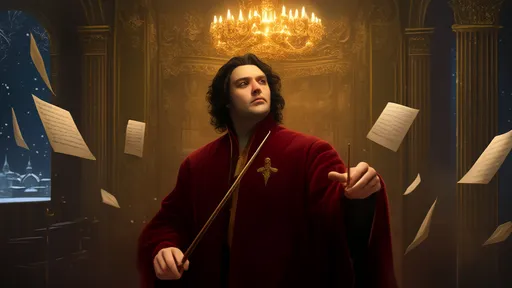
The name Franz Liszt resonates through the annals of music history like a thunderclap. Born in 1811 in the small village of Raiding, then part of the Hungarian Kingdom, Liszt would grow to become one of the most influential musicians of the 19th century. His life was a whirlwind of artistic innovation, personal drama, and unparalleled virtuosity, earning him the title "The King of Piano." To understand Liszt is to delve into a world where genius and passion collided, leaving an indelible mark on classical music.
A Prodigy from the Start
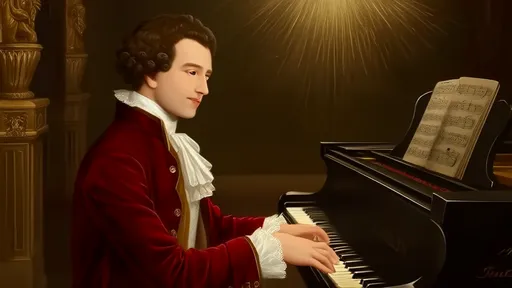
Liszt's talent was evident almost from infancy. His father, Adam Liszt, recognized his son's extraordinary abilities early on and became his first piano teacher. By the age of nine, the young Liszt was already performing in public, astonishing audiences with his technical prowess and emotional depth. His early concerts in Hungary and Austria caught the attention of wealthy patrons, who funded his further education in Vienna under the tutelage of Carl Czerny, a former student of Beethoven.
The Vienna years were transformative. Liszt not only honed his technical skills but also absorbed the musical traditions of the great composers who came before him. By his teens, he was composing his own works, blending the classical rigor of his teachers with a burgeoning romantic sensibility that would later define his style. His move to Paris in 1823 marked the beginning of his rise to international fame, though it was not without its challenges. The Paris Conservatoire refused him admission because of his foreign origins, but this setback did little to slow his ascent.
The Virtuoso Takes Europe by Storm
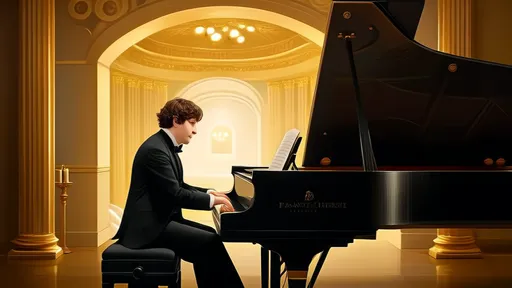
Liszt's reputation as a performer grew exponentially during the 1830s and 1840s. His concerts were not merely recitals; they were spectacles. Audiences flocked to see the tall, handsome pianist with flowing hair and an almost supernatural command of the keyboard. Women swooned, men marveled, and critics struggled to find words to describe his playing. The term "Lisztomania" was coined to describe the frenzy he inspired, a phenomenon akin to the fanaticism surrounding modern pop stars.
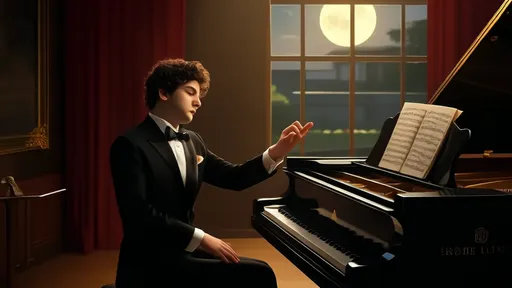
What set Liszt apart was not just his technical brilliance but his ability to convey profound emotion through music. He played with such intensity that it was said he could make the piano sing, weep, or roar. His performances of works by Chopin, Beethoven, and his own compositions left audiences breathless. He also pioneered the solo piano recital, transforming it into the format we recognize today. Before Liszt, it was uncommon for a pianist to perform alone without supporting acts; he made it the norm.
Love, Scandal, and Spiritual Crisis
Liszt's personal life was as dramatic as his music. His affair with the Countess Marie d'Agoult, a married woman, caused a scandal that forced them to flee Paris. Their relationship, which lasted over a decade, produced three children, including Cosima, who would later marry Richard Wagner. The tumultuous romance inspired some of Liszt's most passionate compositions, but it also left him emotionally drained. After their separation, Liszt entered a period of spiritual questioning, eventually leading him to take minor holy orders in the Catholic Church. Though he never fully abandoned his musical career, his later years were marked by a quieter, more reflective approach to composition.
The 1850s and 1860s saw Liszt retreat from the spotlight, focusing on teaching and composing. He settled in Weimar, where he became a mentor to a new generation of musicians. His influence extended beyond the piano; he was a champion of Wagner's operas and a supporter of other progressive composers. Yet, despite his withdrawal from performing, his legend only grew. Young pianists traveled from across Europe to study with him, and his works became staples of the repertoire.
The Legacy of a Titan
Liszt's contributions to music are immeasurable. He expanded the technical possibilities of the piano, composing pieces that pushed the instrument to its limits. His symphonic poems broke new ground in orchestral music, blending narrative and musical form in innovative ways. As a teacher, he nurtured countless talents, ensuring that his artistic vision would endure long after his death in 1886.
But perhaps Liszt's greatest legacy is the way he redefined what it meant to be a musician. He was not just a performer or composer; he was a cultural icon, a man who lived his art with every fiber of his being. His life was a tapestry of triumph and tragedy, love and loss, all of which found expression in his music. To listen to Liszt is to hear the voice of a man who dared to reach for the sublime, and in doing so, changed the course of musical history forever.
By /Aug 7, 2025
By /Aug 7, 2025

By /Aug 7, 2025
By /Aug 7, 2025

By /Aug 13, 2025

By /Aug 7, 2025

By /Aug 7, 2025

By /Aug 7, 2025
By /Aug 7, 2025
By /Aug 7, 2025
By /Aug 7, 2025

By /Aug 7, 2025

By /Aug 13, 2025

By /Aug 13, 2025
By /Aug 7, 2025

By /Aug 7, 2025

By /Aug 7, 2025

By /Aug 7, 2025
By /Aug 13, 2025
By /Aug 13, 2025
